

- Published by:
- Victorian Early Childhood Regulatory Authority
- Date:
- 19 Oct 2026
The VECRA newsletter is sent to all approved providers, services, key stakeholders and subscribers. It is open to anyone interested in the regulation of early childhood education in Victoria.
Celebrating 15 years of excellence in family day care and the 2026 VEYA Awards

Family Day Care Australia (FDCA) is celebrating 15 years of its Excellence in Family Day Care Awards, recognising the dedication, achievements and contributions of family day care educators, coordinators and services across Australia.
The annual awards celebrate the important role family day care plays in providing quality education and care for children. It is also a time to recognise the professionals and services that make a positive difference to children and families.
Celebrating Victoria’s regional winners
Congratulations to the Victorian educators recognised as regional winners in the 2026 awards, announced on 29 September.
This year, 13 Victorian educators received regional recognition, representing both metropolitan Melbourne and regional Victoria, including Gippsland, Ballarat, Bendigo, Geelong, Mildura and the Yarra Valley.
The 2026 Excellence in Family Day Care Awards Gala will take place on Saturday 28 November 2026 in Brisbane.
VECRA congratulates Victoria’s regional award recipients and national finalists on their achievements and acknowledges the valuable contribution of family day care educators, coordinators and services to the education, safety, wellbeing and development of children.
View the full list of Victorian regional winners at the 2026 Family Day Care Australia awards.
Victorian Early Years Awards 2026 winners
Congratulations also goes to the 21st Victorian Early Years Awards (VEYA) winners, who were announced at a special ceremony on Tuesday 27 October 2026.
The 26 finalists were celebrated for their outstanding practice, skill and commitment to improving outcomes for Victorian children and their families.
Individual awards
The winners for their individual contributions to supporting improved learning and development outcomes for children were:
- Early Childhood Teacher of the Year: Diah Hastuti from Dill-be-din Kindergarten. Diah has found creative ways to help children and families feel safe and connected. She learned basic Arabic, introduced keyword sign language, used interpreters and brought Arabic, Oromo and Amharic into the learning environment. This has led to better attendance, communication and wellbeing.
- Educator of the Year: Cerri May from Gowrie at The Harbour. Cerri brings more than 30 years of experience to her role. Cerri believes children are capable, curious learners who thrive in inclusive environments. She works closely with families and professionals to understand each child’s strengths, needs and identity, adapting learning through braille, tactile and sound-based experiences. These experiences build empathy, self-regulation and belonging. She also shares her expertise as a mentor and coach.
The Minister’s Award
Finalists in each category were also eligible for the prestigious Minister’s Award, selected by the Victorian Minister for Children.
This year’s winner of the Minister’s Award was Julie-Anne Joyce from Coburg Children’s Centre. Julie-Anne has worked at the centre for more than 18 years. Julie-Anne champions inclusion, innovation and advocacy in her work. As a proud Deaf educator, she has embedded Auslan and Deaf culture into daily learning. Julie-Anne embeds Auslan through songs, stories and mealtimes. Her leadership shows children that rich communication includes gestures, movement, visual cues, sounds and spoken language.
Find out more
For more information about this year’s winners and finalists, including the recipients of the service and organisation awards, visit Finalists for 2026 VEYA.
Transporting children safely

Many of us have fond memories of excursions with early childhood services when we were young and these trips can have very positive educational outcomes for children. However, transporting children in vehicles is also a high-risk activity that requires careful planning. The safety of children must always be paramount. Extra care must be taken in family day care settings, where private vehicles are often used to transport children.
VECRA Authorised Officers have recently detected a range of issues related to transportation, particularly in family day care settings. Issues include the use of expired car seats, children being transported without proper authorisations, and in one example, children being transported by an unlicenced driver.
Early childhood services, including family day care, must have a range of policies and procedures in place when transporting children in their care. These are in Quality Area 2: Children’s Health and Safety of the National Quality Framework. These requirements apply whether children are being transported for an excursion, a regular outing or for any other purpose.
Regulations 102B-102F of the Education and Care Services National Regulations set out specific requirements for transportation of children in early childhood education and care.
What are excursions, regular transportation, and transportation for other purposes?
An excursion generally includes one or more of the following:
- it supports and encourages children to explore, extend and enhance their learning, usually outside their usual place of early childhood education and care
- it involves children and staff taking a walk, drive or other type of transport to a destination away from the early childhood education and care premises
- it is part of a planned educational program for children.
Regular transportation is generally considered:
- transportation where the circumstances are largely the same each trip, including key elements such as the route taken, the time of transportation and the vehicle used.
Other types of transportation are generally considered:
- transport to move children to, from or between school/s
- transport to move children between their homes and an early childhood education and care premises
- trips such as a family day care educator transporting children in their care while they pick up other children from school or drop them off.
What do centre-based services and family day care need to do to comply?
Approved providers are required by law to ensure they have the following in place:
- Risk assessments to identify and assess risks to children’s safety, health or wellbeing specific to the transportation. The risk assessment must set out how identified risks will be managed and minimised. For regular transportation, risk assessments should be completed every 12 months.
- Full written authorisation to transport a child, either from the child’s parent or another person authorised by the parent. This includes for regular transportation. In centre-based services, any authorised person must be named in the child’s enrolment record as having authority to authorise transportation of the child.
- A suitable restraint that is less than 10 years old and properly adjusted and fastened that complies with requirements under Victorian law. The type of restraint used should be based on the child’s age and height. The 5-step test can help determine whether older children can use adult seat belts or still need a booster seat or forward-facing restraint. Services and family day care educators must follow the Transport Victoria recommendation that car restraints are not more than 10 years old from the date of manufacture, as materials and parts become worn over time.
- A valid drivers licence for the driver of any vehicle, including those used to transport children.
All approved providers or family day care educators who transport children as part of their early childhood education and care should carefully review all the regulatory requirements. They must ensure they fully understand all the requirements under the law for the safe transportation of children in their care.
Risk assessments and authorisations for transportation of children must also be available for inspection by authorised officers upon request.
Where can I find more information about what’s required?
The VECRA website has links to a full range of resources with the information services need and the requirements they must meet when transporting children:
- policies and procedures for transporting children
- educator to child ratio requirements
- first aid requirements
- adequate supervision and protection from harm and hazards
- risk assessments for transportation
- notifying VECRA (centre-based services only) within 7 days of regular transport being provided or arranged by the service using the NQA ITS system
- written authorisations from parents and carers
- person to be present when children embark and disembark during regular transportation (centre-based services only)
- records of transportation
- passenger safety (including seatbelts, correctly fitted car seats)
- checking the vehicle to ensure no children remain
- insurance
ACECQA’s Risk Assessment and Management Tool can assist services doing risk assessments, including assessments required to transport children.
Starting Out Safely, Victoria’s early childhood road safety education program, has a range of road safety resources for parents and educators, including:
- Safe Transport and Road Safety Education Policy templates for both family day care and centre-based services
- other resources specifically for educators.
Transport Victoria has extensive advice on child car restraints, including laws that apply in Victoria.
Child Safe Standard 7: Processes for complaints and concerns are child-focused
Creating environments where children feel safe, heard and respected is at the heart of Child Safe Standard 7 (CSS 7). The standard requires organisations to have child-focused processes for managing complaints and concerns, ensuring children, families, educators, staff and volunteers know how to raise issues and can be confident they will be taken seriously.
Early childhood services must maintain accurate and secure records of all child safety concerns and complaints, including actions taken and outcomes, to support accountability and continuous improvement. Child safety concerns should be responded to promptly, with the safety and wellbeing of children prioritised through appropriate risk assessment, protective action, evidence preservation and, where necessary, reporting to relevant authorities.
In early childhood settings, children may communicate concerns in many ways, including through words, behaviour, play, drawings or changes in emotional wellbeing. Services play an important role in recognising these signs and responding appropriately.
To comply with CSS 7 all childhood and education services in Victoria must meet the following elements of the standard:
- 7.1 The organisation has an accessible, child-focused complaint handling policy which clearly outlines the roles and responsibilities of leadership, staff and volunteers, approaches to dealing with different types of complaints, breaches of relevant policies or the Code of Conduct and obligations to act and report.
- 7.2 Effective complaint handling processes are understood by children and young people, families, staff and volunteers, and are culturally safe.
- 7.3 Complaints are taken seriously and responded to promptly and thoroughly.
- 7.4 The organisation has policies and procedures in place that address reporting of complaints and concerns to relevant authorities, whether or not the law requires reporting, and co-operates with law enforcement.
- 7.5 Reporting, privacy and employment law obligations are met.
What should a service's approach to CSS 7 look like?
In practice, a compliant and effective CSS 7 approach may include:
- Maintaining current, accessible policies and procedures that support complaint handling, reporting, record keeping, child safety obligations and escalation pathways.
- Ensuring complaint processes are child-focused, culturally safe, easy to understand and accessible, with clear information on how to raise concerns.
- Fostering a culture where children, families, staff and volunteers feel safe and supported to speak up and raise concerns.
- Responding to complaints promptly, fairly and respectfully, while managing risks to children and protecting privacy and confidentiality.
- Ensuring complaint processes address harm, abuse, unsafe behaviour and breaches of child safety requirements, and clearly outline reporting obligations to relevant authorities and are trauma informed.
- Supporting staff and volunteers to understand their roles, responsibilities and reporting obligations, including cooperation with external agencies and investigations.
- Consulting with children, families and communities when reviewing complaint processes and use feedback, complaints and concerns to strengthen child safety practices and support continuous improvement.
What will VECRA authorised officers look for when assessing compliance with CSS 7?
When assessing compliance with CSS 7, VECRA authorised officers will look for evidence that complaint and concern processes are not only documented, but are understood, child-focused, accessible and consistently implemented across the service.
This may include evidence that:
- The service has a child-focused, accessible and culturally safe complaint handling policy that clearly outlines complaint processes, support available to complainants, record-keeping requirements and reporting obligations.
- Children, families, staff and volunteers understand how to raise concerns and can easily access information about complaint processes.
- Complaint processes are inclusive, consistently implemented, and ensure complaints and concerns are taken seriously, recorded appropriately and responded to promptly.
- Staff and volunteers understand their child safety and mandatory reporting obligations, including when concerns must be escalated to relevant authorities.
- Risks to children are identified and managed, with appropriate processes in place for privacy, confidentiality and record-keeping.
- Leadership promotes a culture where speaking up is encouraged and supported.
- The service reviews complaints and concerns to identify trends, strengthen child safety practices and support continuous improvement.
More information and resources
Further guidance on CSS 7 is available from:
- CCYP | Standard 7: Processes for complaints and concerns are child-focused
- CCYP | Resources and support for the Child Safe Standards – including:
- Short guide to the Child Safe Standards
- Information sheets
- Plain language Child Safe Standard resources
- Translated resources – available in 20 community languages
- On demand videos
- Complaints processes | vic.gov.au
- Compliance requirements for early childhood services | vecra.vic.gov.au
- Complaint Handling Guide | National Office for Child Safety
Building design guidance to keep children safe
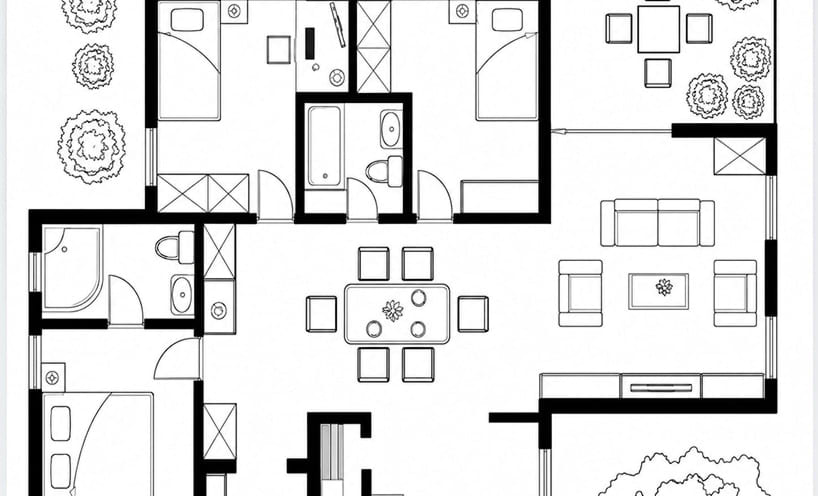
Effective supervision is essential to protecting children’s safety, wellbeing and rights. Building design plays a vital role in helping educators supervise children effectively and keeping children safe.
Regulation 115 of the Education and Care Services National Regulations requires that the approved provider of a centre-based service ensure the service premises, including toilets and nappy change facilities, are designed and maintained in a way that facilitates the supervision of children at all times they are being educated and cared for, while also respecting children's rights and dignity.
The Australian Children’s Education and Care Quality Authority (ACECQA) has released national guidance on Facilitating Supervision and Child Safety (Regulation 115) to help early education and care services create environments that support supervision and children's wellbeing.
Purpose of the guidance
For those planning a new service, undertaking renovations or reviewing existing environments, the guidance will assist in identify risks, strengthening supervision practices and ensuring children’s safety and wellbeing through building design.
It includes a number of strategies for ensuring clear sightlines, minimising blind spots and reducing isolated spaces and is supported by practical examples, 3D renderings, reference photographs and nationally agreed approaches.
The guidance does not introduce new legal requirements. It provides practical examples of how regulation 115 can be applied across service settings and adapted to service needs.
Further information
The guidance may be used alongside:
- The National Law
- The National Regulations
- The National Construction Code (NCC)
- Australian Standards and local planning requirements.
Supervision and safety for younger children at vacation and holiday care

Many young children attend vacation care and holiday programs during the summer before starting school.
These programs provide valuable opportunities for children to learn, play and socialise. However, younger children often have different developmental, social and emotional needs than older children. It is important that services recognise these differences and plan accordingly.
Supporting younger children to settle and thrive
Younger children may find it more challenging to navigate unfamiliar environments, routines and expectations. Services should provide environments that support their developmental stage and provide age-appropriate experiences.
Establishing consistent routines and predictable expectations can help younger children feel safe, secure and confident, particularly when they are attending a program for the first time.
Planning for safe and effective supervision
Approved providers must ensure that services and educators plan appropriately for younger children, particularly in relation to staffing, supervision and risk management.
Younger children generally require closer supervision during:
- transitions between activities
- excursions and regular outings
- outdoor play
- arrival and departure times.
Services may need to roster additional educators above the minimum educator-to-child ratio or engage other responsible adults to ensure adequate supervision and support.
Risk assessment considerations
The measures needed to ensure children's health, safety and wellbeing will vary depending on the circumstances of each program.
Risk assessments should consider:
- the age, developmental stage and individual needs of children attending
- the location and environment
- planned activities
- weather and heat-related risks
- transport arrangements
- access to water environments
- the use of digital technologies.
Services should ensure that risk assessments identify both everyday and higher-risk situations and outline strategies to manage those risks effectively.
Excursions and outings
Excursions and regular outings can present additional challenges for younger children. These activities often involve unfamiliar environments, larger crowds and multiple groups sharing public spaces.
Services should carefully consider how they will maintain effective supervision and meet their obligations under the Child Safe Standards.
For example, where programs operate in public areas or children need to access public toilets, services should identify potential risks and implement strategies to keep children safe in public places where other adults may be present.
Supporting educators
Services should also consider whether educators have the knowledge and experience required to support younger children effectively.
Where educators have limited experience working with younger children, services should provide additional training, guidance and supervision to ensure children's needs are understood and appropriately met.
Risk assessment templates
Download ACECQA's risk assessment templates and checklists for:
- Excursions and regular outings
- Transporting children
- Safe transportation of children and regular transportation
- Indoor and outdoor learning environments.
Supporting resources
Read more about your legal obligations for each of these issues:
Reduce the risk of mosquito-borne diseases

Warm and wet weather can result in greater numbers of mosquitoes and an increased risk of illness from mosquito bites.
It is essential that early childhood education and care services take steps to protect children and staff from mosquito-borne diseases. The most effective way is to avoid mosquito bites.
Breeding in stagnant water in warmer months, mosquitoes can transmit serious diseases, including Japanese encephalitis, Ross River virus and Murray Valley encephalitis.
Actions services can take to protect staff, families and children:
- make mosquito protection part of getting ready to go outside, just like sunscreen and a hat
- dress children in long, loose-fitting, light-coloured clothing to reduce skin exposure when outdoors
- apply insect repellent that contains picaridin or DEET on exposed skin – both of which are safe for children over 2 months old. Apply repellent to your hands first, then gently rub onto the child’s exposed skin.
- for babies, consider applying repellent to clothing or using mosquito netting over prams
- limit outdoor play during peak mosquito activity, especially at dawn and dusk avoid areas with stagnant water, such as ponds or uncovered containers, which are breeding grounds for mosquitoes.
- removing stagnant water from outdoor play areas and garden containers sealing rainwater tanks and cleaning gutters to prevent mosquito breeding
- consider installing and maintaining flyscreens on windows and doors
- use knockdown sprays or plug-in repellents in indoor and outdoor gathering areas.
Free Japanese encephalitis vaccines
Japanese encephalitis virus is spread to humans through bites from infected mosquitoes. It can cause a rare but potentially serious infection of the brain.
A free vaccine is available to eligible Victorians at higher risk of the virus.
For more information, including vaccine eligibility, refer to the Department of Health’s Japanese encephalitis webpage.
Resources and support
- Visit the Better Health Channel for translated resources, posters, and detailed disease information.
- Refer to the Royal Children’s Hospital guidelines for safe insect repellent use with children. For health concerns, visit their doctor or phone Nurse-on-Call: 1300 606 024 (available 24 hours).
Authorised officers’ role and function

Authorised Officers play a key role in regulating early childhood and school aged services. In Victoria they are appointed by the Victorian Early Childhood Regulatory Authority (VECRA).
Authorised Officers have powers to enter early childhood education and care service premises and gather information, and these powers are granted under the National Law and Regulations, and the Children’s Services Act (Victoria). All Authorised Officers employed by VECRA must participate in intensive training, including Assessment and Rating training conducted by Australian Children’s Education & Care Quality Authority (ACECQA).
When Authorised Officers visit services, they must present their VECRA identity card that includes key details about their authorisation. An Authorised Officer must carry and present this identity card whenever they are exercising functions under the National Law.
VECRA conducts rigorous background checks in relation to Authorised Officers, including to ensure that they all have a valid Working with Children Check.
When an Authorised Officers presents their VECRA identity card services do not need to request:
- a Working with Children Check
- the Authorised Officer’s date of birth
- any provider-specific child safety, induction or other training, or
- any other verification processes that may unreasonably delay them.
Under s197 of the National Law, Authorised Officers may visit services for a range of reasons, including assessment and rating visits, to monitor compliance with the National Law and Regulations, and to investigate concerns or complaints. They may also visit to gather information for regulatory reasons. For example, pre-service approvals or other licensing situations.
As part of these visits, Authorised Officers may:
- observe practice and service operations
- inspect records and documents
- ask questions and request information that relate to the service’s operation and its compliance with the law
- take photographs
- make video or audio recordings
- make sketches, or
- use electronic devices provided by VECRA.
For more information read ACECQA’s new information sheet: What to expect when an authorised officer visits your service. This information relates to National Quality Framework services however Authorised Officers have similar powers under the Children’s Services Act (Victoria).
New safe sleep training for family day care services
A new safe sleep microskill has been developed for family day care services across Australia.
Everyone involved in family day care has an important role to play in keeping children safe. The safe sleep microskill will help participants to:
- identify the key principles, responsibilities, policies and guidelines for safe sleep practices
- comply with Australian standards and guidelines
- implement effective monitoring and supervision techniques
- analyse common sleep-related risks and develop mitigation strategies
- communicate effectively with parents and carers.
An updated Sleep and Rest Risk Assessment Template has also been released to help approved providers and services identify and manage risks associated with children's sleep and rest.
Unique College of Technology registration cancelled

The Australian Skills and Quality Authority (ASQA) has cancelled the approval of Unique College of Technology (RTO 91358). The cancellation is effective from 2 September 2025.
What qualifications are impacted by the cancellation?
Qualifications and Statements of Attainment issued between 1 June 2022 and 2 September 2025 are affected. These include:
- Certificate III in early childhood education
- Diploma of early childhood education, and
- First aid qualifications.
These cancellations took effect on 16 October 2026.
Read more information at: Cancelling of qualifications – Unique College of Technology RTO 91358 | ASQA
To see a complete list of all cancelled RTOs, refer to ASQA - Qualification integrity actions.
What do approved providers need to do?
- Review your staff records. Check if anyone holds qualifications from Unique College of Technology for the relevant dates. Check with the staff member if it has been cancelled.
- Ensure all of your staff and your service can meet the relevant requirements. This depends on the type of service:
- Services regulated under the NQF – check the educator qualification requirements and including first aid and training
- Occasional care and limited hours children’s services under the Children’s Services Act 1996 - check the educator qualifications and first aid and safety training.
Notify VECRA
Notify VECRA if you become aware that a staff member has a cancelled qualification:
- call 1300 307 415 or
- email VECRA licensing
New Child Link resources and a reminder to sign up for training

Child Link is a digital tool that displays key information about the children enrolled at your service. This includes a child’s participation in Maternal and Child Health (MCH) Services. Services can use Child Link and information sharing to support the wellbeing and safety of children.
Approved providers should access Child Link by following the information in the updated kindergarten funding guide.
New resources
The Department of Education has developed resources to help professionals explain Child Link to families.
The resources include topics on:
- what Child Link is
- how professionals use it to support children, and
- resources designed for First Nations people.
You can download flyers and fact sheets to support your conversations with families.
To access the new resources, visit the Child Link webpage for more information.
Services can use Child Link to help meet child safety requirements. Actively using Child Link may help you to meet your obligations under:
- Child Safe Standard 8: Staff are equipped with the knowledge, skills and awareness to keep children and young people safety through ongoing education and training, and
- Quality Area 2 under the National Quality Framework: Children's health and safety.
Approved providers can nominate up to 3 Victorian Institute of Teaching-registered teachers and the nominated supervisor (PDF, 127 KB) as Child Link Users for each service.
Training is available
Staff must complete Child Link training and information sharing modules before they can access the systems.
eLearning modules and interactive webinars are available to help you:
- understand information sharing, and
- how to access and use Child Link.
If you need to become a Child Link User but have not yet completed Information Sharing training, complete the Information Sharing and Child Link Training (combined) webinar or eLearn.
Complete the stand-alone Child Link User webinar or eLearn if you have already completed Information Sharing training.
To access the training, create an account on the: Information Sharing and MARAM Online Learning Management System.
How to gain access to Child Link
To find out if your service has a Child Link Authoriser and if you are eligible to be a Child Link User, please email Child Link. Services should refer to the detailed guidance on our dedicated webpage for early childhood providers.
If you are already a Child Link User, you should continue to use Child Link to support the wellbeing and safety of children in your care. Log into Child Link at Child Link - Login.
Find out more
For more information, refer to:
- Child Link for Early Childhood Providers
- Child Link general information webpages
- Information Sharing and Family Violence Reforms – Guidance and Tools
- Child Information Sharing Scheme
- Child Safe Standards.
For further enquiries on Child Link and information sharing training:
- phone: 1800 549 646 (Monday to Friday, 9 am to 5 pm)
- email Child Link enquiries
For support with Child Link access, contact the Child Link team by email.
Reminder: mandatory advanced child safety training

Advanced child safety training (courses 3, 4 and 5) is available now in Geccko.
Nominated supervisors, persons in day-to-day charge, and staff members who work directly with children must complete courses 3 and 4 in addition to the foundation training. These courses support staff to build child-safe cultures through everyday practice and respond to safeguarding concerns.
Persons with management or control (PMCs), nominated supervisors and persons in day-to-day charge of a service must also complete course 5. This course focuses on leading and governing child safety.
If you held a relevant role before 30 September 2026, you must complete the advanced training by 31 March 2027.
If you started in a relevant role on or after 30 September 2026, you must complete it within 3 months of your start date.
Learn more about national child safety training, and access the September newsletter article on child safety and child protection training for a detailed overview including record keeping advice.
Reminder notice for annual fees

An increase in annual service fees for early childhood education and care providers was agreed to by education ministers from most states and territories in February 2026. Fee increases are scaled based on the size of the service and the size and type of provider, with larger increases applying to large for-profit providers.
ACECQA have now issued invoices for the 2026–27 NQF annual service fees to all providers of services in Victoria on 9 October.
This process happened later this year in Victoria and NSW due to the revision of the fee structure.
The invoicing timeline for this year is:
- invoices available – Friday 9 October 2026
- reminder notice – Monday 16 November 2026
- late charge 1 – Friday 11 December 2026
- late charge 2 – Monday 11 January 2027.
Thank you to those providers who have already paid their invoice.
A reminder notice was sent on Monday 16 November to those who have not yet paid. A late fee of 15% will apply to invoices not paid by the due date stated in the invoice.
VECRA appreciates your cooperation and prompt payment of the annual service fee invoices.
Contact us if you have any queries about invoices or if you have not received an invoice for your service(s) for 2026–27.
The VECRA contact page also has information about the free interpreter service or using the National Relay Service if you have hearing impairment.
Noting the 2026-27 Annual Fee reflects the size and type of provider or service as at 1 July 2026, where providers and services believe that their fee schedule is incorrect, they can write to VECRA detailing why they think the invoiced fee is incorrect.