

- Published by:
- Victorian Early Childhood Regulatory Authority
- Date:
- 30 July 2026
The VECRA newsletter is sent to all approved providers, services, key stakeholders and subscribers. It is open to anyone interested in the regulation of early childhood education in Victoria. Sign up to receive the newsletter.
New requirements from 12 August
From 12 August, new regulatory requirements will apply to approved providers and services.
Display of quality rating and compliance information
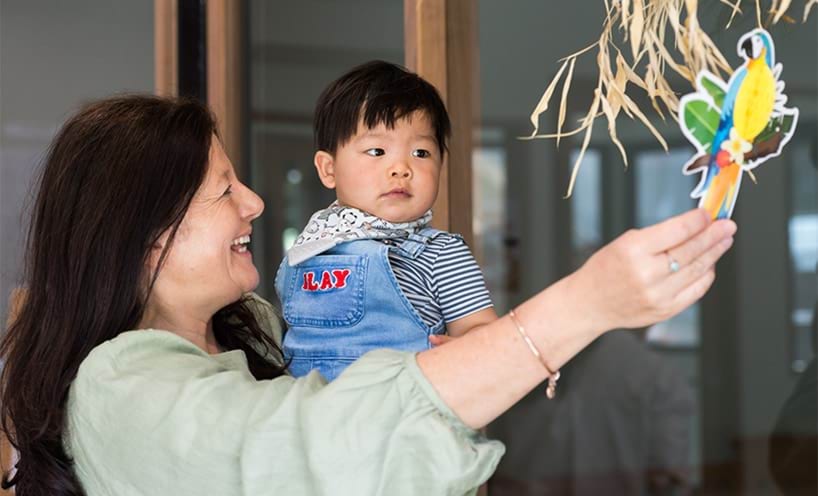
Approved providers must ensure the current and previous overall quality rating, along with compliance history for the past 2 years is displayed at every service premises by 12 August 2026. Family day care services must display it at each venue, residence and the principal office.
In early August, VECRA will commence sending approved providers the information required to be displayed at their services. Thereafter, approved providers will be responsible for ensuring information is accurate, up to date and clearly displayed.
VECRA’s website has information about what is required to be displayed, where it is to be displayed, examples of what it may look like, how to keep it current and an information sheet which can be shared with families.
New sexual conduct notification requirement
From 12 August 2026 a new notification type is being introduced. Approved providers must notify VECRA within 24 hours of becoming aware of any sexual conduct committed against, with or in the presence of a child, by anyone working in or for their service (including any staff member or volunteer).
Approved providers already have systems in place to notify the Social Services Regulator about this conduct under the existing Reportable Conduct Scheme, and VECRA where the conduct occurs within a service. These existing obligations are not changing and will continue to be required.
The new notification type expands reporting to VECRA to include sexual conduct occurring outside of education and care services (for example, on the weekend or at a shop, park or restaurant). From 12 August approved providers must notify:
- VECRA within 24 hours of becoming aware of sexual conduct
- Social Services Regulator within 3 business days of becoming aware of the allegation.
Sexual conduct required to be notified includes sexual offences and sexual misconduct which can include behaviour, physical contact or communication of a sexual nature inappropriate touching, grooming behaviour or voyeurism.
NQF providers must notify VECRA online using the National Quality Agenda IT System (NQA ITS). The incident notification will be available in NQAITS from 12 August.
To ensure compliance with all regulations we recommend providers notify VECRA and the SSR at the same time, within 24 hours.
Information on implementing Child Safe Standard 3
Practical guidance to embed embed Child Safe Standard 3 by empowering children and young people to participate in decisions that affect them.
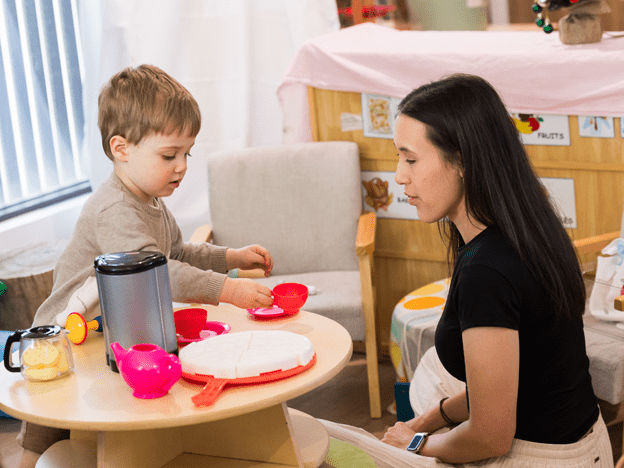
Child Safe Standard 3 – children and young people are empowered about their rights, participate in decisions affecting them and are taken seriously - recognises children are active participants in their own lives and their perspectives are valuable. Children communicate their thoughts, feelings, and preferences through their words, behaviours, play, and interactions.
When children are supported to participate in decisions that affect them, they develop a stronger sense of agency, belonging, and wellbeing. Early childhood education and care services must create environments where children understand their rights, feel confident expressing their views, and know adults will listen and respond appropriately.
Empowering children in this way is a key protective factor in preventing harm. Children who understand their rights and feel comfortable speaking up are more likely to raise concerns, seek help when needed and contribute to creating a positive and safe culture.
Services which actively seek out and respond to children's views are better able to identify risks, respond to concerns, and ensure children feel safe and supported.
To comply with CSS 3, all early childhood education and care services in Victoria must meet the following elements of the standard:
- Children are informed about all of their rights, including to safety, information and participation (3.1).
- The importance of friendships is recognised and support from peers is encouraged, to help children feel safe and be less isolated (3.2).
- Where relevant to the setting or context, children are offered access to sexual abuse prevention programs and to relevant related information in an age-appropriate way (3.3).
- Staff and volunteers are attuned to signs of harm and facilitate child-friendly ways for children to express their views, participate in decision-making and raise their concerns (3.4).
- Organisations have strategies in place to develop a culture that facilitates participation and is responsive to the input of children (3.5).
- Organisations provide opportunities for children to participate and are responsive to their contributions, thereby strengthening confidence and engagement (3.6)
What empowering children looks like for a service
An effective approach to CSS 3 includes creating meaningful opportunities for children to participate in everyday decisions, express their views, and contribute to their learning and wellbeing. Children's voices should be embedded within service culture rather than treated as a one-off activity or consultation process.
In practice, a compliant and effective approach to CSS 3 may include:
- teaching children about their rights, personal safety, body autonomy, and respectful relationships through age-appropriate experiences and discussions
- supporting children from diverse backgrounds, including Aboriginal children, children with disability, and children from culturally and linguistically diverse communities, to participate fully and express their views
- encouraging children to make choices about routines, learning experiences, play environments, and activities
- actively listening to children's views and showing them how their feedback influences decisions and practices
- using visual supports, stories, role play, and other age-appropriate strategies to help children understand how to seek help or raise concern and ensuring children know who trusted adults are and how they can approach them for support
- encouraging positive peer relationships and helping children develop skills to support one another and seek assistance when needed
- maintaining environments where children feel respected, included, and confident that their thoughts and concerns will be taken seriously.
What VECRA authorised officers consider when assessing compliance with CSS 3
During visits, VECRA authorised officers may:
- observe interactions between educators and children to assess whether children's voices are valued and respected
- observe whether children appear confident expressing their views and whether educators respond respectfully and appropriately
- review how the service ensures all children, including those with additional needs or diverse backgrounds, can participate and have their voices heard
- ask educators how they support children to understand their rights and participate in decisions
- review educational programs, observations, and planning documentation for evidence of children's voice and agency
- examine how children are supported to raise concerns or seek help if they feel unsafe or uncomfortable
- assess whether information about rights, safety, and help-seeking is accessible and appropriate for children's ages and stages of development
- assess whether children's feedback is considered in decision-making and service improvement processes.
More information and resources
Further guidance on CSS 3 is available from:
- Child Empowerment – VECRA
- NQF Child Safe Culture Guide – ACECQA
- Resources and support for the Child Safe Standards – CCYP
- What are children's rights and how do they apply in early education and care? – Community Early Learning Australia
Developing a Quality Improvement Plan through children’s participation
Find out how children's participation can create meaningful, responsive and effective Quality Improvement Plan (QIP).

In our June newsletter we explored how educators can embed children's agency into everyday practice. This article builds on that theme by providing practical guidance to support the development of a Quality Improvement Plan (QIP) informed by children's voices, ensuring their perspectives help shape continuous improvement.
Approved providers must comply with NQS Element 7.2.1 and ensure an effective self-assessment and QIP is in place for each service. Read the Guide to the National Quality Framework for information on the self-assessment process and what is required.
A QIP is most effective when it reflects the voices, experiences and ideas of the children who attend the service. ACECQA identifies self-assessment and continuous improvement as the foundation of an effective QIP. Children's perspectives are an important source of evidence during this process, helping educators identify strengths, priorities and opportunities for improvement across all quality areas of the National Quality Standard (NQS).
Children’s participation in learning frameworks and the Child Safe Standards
Services must deliver an educational program to all children being educated and cared for that is based on an approved learning framework.
Approved learning frameworks recognise children as capable, active participants in their learning. Each framework highlights the importance of children's voices, agency and participation.
VEYLDF supports Victorian children from birth to 8 years in their development as confident learners, becoming strong in their identity and connection to others. The VEYLDF has recently been updated. To learn more about the updated VEYLDF, register for upcoming information sessions.
EYLF supports children's learning from birth to five years and through the transition to school. It recognises educators intentionally creating opportunities for children to express their ideas, make choices and influence decisions strengthen children's agency, identity, wellbeing and learning outcomes.
MTOP is a framework for school aged children. It supports educators working with school age children in outside school hours care (OSHC) and other school age care settings.
It recognises children as active citizens with the capacity to contribute to decisions that affect them. By providing genuine opportunities for children to share their perspectives, make choices and collaborate in planning, educators strengthen children's agency, wellbeing, identity, learning and sense of belonging.
Together with the Victorian Child Safe Standards (CSS), these frameworks encourage educators to create meaningful opportunities for children to express their views, influence decisions and contribute to continuous improvement.
Building or updating your QIP through children's voices
Under the National Regulations (Regulations 31 and 55), a service must develop a QIP within 3 months of service approval and make it available for inspection on site.
When developing the QIP, educators should think about what children are telling them. Educators can gather children's perspectives through:
- conversations during play and routines
- drawings, photographs and learning stories
- group discussions
- observations of children's interests and behaviours
- children's suggestions for learning environments, and
- reflections about daily routines and experiences.
Demonstrating continuous improvement
Continuous improvement is an ongoing cycle of listening, reflecting, acting and evaluating. A QIP should clearly demonstrate how children's voices have influenced improvement priorities, the actions taken in response and the positive outcomes achieved for children.
This cycle aligns with ACECQA's continuous improvement approach and supports Victorian Child Safe Standard 10, which requires organisations to regularly review and improve child safe practices.
Resources and related information
- Download ACECQA’s QIP template to help with developing your QIP.
- ACECQA also offers an online course to support the development of a Quality Improvement Plan (QIP) for your service.
- Information on VEYLDF - Victorian Early Years Learning and Development Framework (VEYLDF)
National child safety training reminder
The deadline for workers and volunteers to complete mandatory child safety training is approaching.
Both child safety training and child protection training are mandated for specific roles under the National Law and National Regulations.
The free training assists staff to understand the child safety framework and requirements for keeping children safe.
Approved providers must ensure Foundations of Child Safety training is completed before the deadline.
Foundations of Child Safety training consists of the modules:
- understanding child safety
- understanding and identifying child abuse and neglect.
The deadline for completing the 2 Foundations of Child Safety modules is 27 August 2026 for all existing workers appointed before 14 August 2026.
Workers appointed after 14 August 2026 must complete the training:
- within 14 days of the person being employed, engaged or appointed at the service, or
- before working directly with children (whichever is earlier).
Individuals can download a completion certificate from Geccko after completing both Foundations of Child Safety modules. Read instructions on using Geccko, including how to download the certificate.
Information about Advanced Child Safety training is available on the Department of Education website.
Victorian child protection training
Specified staff, students and volunteers in NQF services must also complete the online child protection training module (EC PROTECT). Confirm who needs to complete the training at: Child protection and child safety in early childhood.
People appointed before 14 August 2026 have until 27 August 2026 to complete the training . Those appointed after that date must complete the training before working with children, or within 14 days of being employed at the service, whichever is earlier.
Access the online module at: Protecting Children – Mandatory Reporting and other Obligations for Early Childhood (EC PROTECT).