

- Published by:
- Victorian Early Childhood Regulatory Authority
- Date:
- 30 June 2026
The VECRA newsletter is sent to all approved providers, services, key stakeholders and subscribers. It is open to anyone interested in the regulation of early childhood education in Victoria. Sign up to receive the newsletter.
New regulations for Victorian services
Services regulated under the National Quality Framework must abide by new requirements which came into effect in June.

From 11 June 2026 there are new regulations which apply to all Victorian ECEC services regulated under the National Quality Framework.
The new Victorian regulations also introduce 4 new infringeable offences and larger penalties for offences committed by large providers.
Display of quality and compliance information
The regulations require all services to display their current and previous overall quality rating, along with their compliance history for the past 2 years from 12 August 2026.
This information should be clearly visible and displayed near the service’s entrance. Family day care services need to display it at their venue, residence and principal office.
Approved providers will be responsible for ensuring information is accurate, complete and current.
Refer to the Displaying quality and compliance history webpage for full details of the information required, examples of what it may look like, and an information sheet to share with families.
Reportable sexual conduct notification
From 12 August 2026, approved providers must notify VECRA within 24 hours of becoming aware of reportable sexual conduct that occurs at a service or outside it.
Reportable sexual conduct, or a sexual offence, is committed against, with or in the presence of a child by a person employed or engaged to perform work or provide services at an education and care service.
This includes the following staff:
- nominated supervisors.
- educators
- family day care educators
- anybody else who is employed or engaged by the service.
- volunteers.
Infringeable offences
The new Victorian regulations also introduce four new infringeable offences and larger penalties for offences committed by large providers. Three of these new infringeable offences are now in force with the fourth to commence on 12 August 2026:
- section 216D (8) – failure to comply with emergency order, service closure for emergency events
- section 223 B(4) – failure to comply with Ministerial direction to take specific action to prioritise the safety, welfare or wellbeing of children attending education and care services
- section 261 A(4) – failure to comply with Regulatory Authority direction to take specific action for the safety, health or wellbeing of children
- section 172(3) – failure to display quality and compliance history at education and care service premises.
Related provider provisions
From 24 June, changes to regulations give VECRA clear guidance to be able to determine if providers are ‘related’, with shared operational links, based on shared:
- HR, payroll and IT systems
- management and control arrangements
- ownership, franchise arrangements and associations.
Child Safe Standard 10 – Implementation of the Child Safe Standards is regularly reviewed and improved
This article provides information and guidance to help providers and educators implement best practice processes related to Child Safe Standard 10.

To be child-safe an organisation must do more than establish policies and procedures. It also requires ongoing reflection, evaluation and improvement.
An effective approach to Child Safe Standard 10 (CSS 10) includes services taking proactive steps to support learning, accountability, and continuous improvement in everyday practice. Ongoing reflection strengthens child-safe practices and supports continuous improvement.
In early childhood education and care services this means regularly reviewing how effectively Child Safe Standards are being implemented and identifying opportunities to strengthen practice. CSS 10 ensures child safety remains relevant, responsive, and embedded within continuous improvement processes.
Continuous improvement supports services to adapt to emerging risks, reflect on incidents or concerns, and respond to feedback from children, families, staff, and the broader community.
When services regularly and actively evaluate their child safety strategies, they can identify gaps, celebrate strengths, and make informed decisions that enhance children’s safety and wellbeing.
To comply with CSS 10, all early childhood education and care services in Victoria must, at a minimum, ensure they meet the following elements of the standard:
- the service regularly reviews, evaluates, and improves child safe practices (10.1)
- complaints, concerns and safety incidents are analysed to identify causes and systemic failures to inform continuous improvement (10.2)
- the service reports on the findings of relevant reviews to staff and volunteers, community and families, and children and young people (10.3).
What does it look like for a service to successfully embed continuous improvement
In practice, a compliant and effective approach to CSS 10 may include:
- embedding child safety into the service’s Quality Improvement Plan, ensuring it is regularly reviewed and updated
- periodic reviews of child safety and wellbeing policies to ensure they remain current, relevant, and aligned with legislation and best practice
- reflecting on incidents, complaints, or near misses to identify patterns, risks, and opportunities for improvement
- maintaining and clearly documenting reviews, findings, and actions taken to improve child safety
- ensuring continuous improvement actions are assigned, tracked, and revisited to confirm effectiveness.
- staying informed about updates to legislation, standards, and sector guidance, and integrating these into service practices
- using staff meetings and reflective practice sessions to evaluate how child safety is implemented in daily practice
- collecting and responding to feedback through surveys, conversations, or meetings with families, children (where appropriate), staff, and volunteers
- promoting a learning culture where feedback is welcomed and viewed as an opportunity for growth rather than criticism.
What VECRA authorised officers consider when assessing compliance with CSS 10
During visits, VECRA authorised officers may:
- review documentation such as the Quality Improvement Plan, meeting minutes, and policy review schedules to assess how child safety is evaluated and improved
- ask educators and leadership how the service gathers and responds to feedback about child safety
- examine how incidents or concerns have been reviewed and what changes were implemented as a result
- look for evidence that child safety practices are regularly updated and not outdated
- assess whether continuous improvement processes are meaningful, ongoing, and embedded into service operations
- observe whether staff demonstrate reflective practice and an understanding of how improvements are made.
More information and resources
Further guidance on CSS 10 is available from:
- Reviewing Child Safety Practices – VECRA
- NQF Child Safe Culture Guide – ACECQA
- Resources and support for the Child Safe Standards – CCYP
- Child Safety Risk Monitoring, Reviewing and Reporting Quick Reference Guide (PDF) – National Office for Child Safety
Annual service fee and transaction fee increases
An update on annual service fee processing for this year.

Earlier this year education ministers across Australia met and agreed to increase the annual service fees charged to approved providers in all jurisdictions (other than Queensland, Western Australia and the Northern Territory) on top of annual indexation, from 1 July 2026.
These fee increases are necessary to support child safety through increased regulation of the sector. Recent major reforms have strengthened the National Law meaning regulators have more powers to make sure that the safety, rights and best interests of children are paramount in all early childhood settings.
To implement the fee increases, amendments to the National Regulations are required, which means annual service fee invoices will be issued by ACECQA later than usual this year, once the regulations are finalised and updates are made to NQA ITS.
While VECRA is not able to give an exact timeframe, we expect ACECQA to issue invoices to approved providers operating services under the NQF in the coming months. We also won’t be able to give indicative service fees until this has taken place.
Services that operate under the Children’s Services Act, such as occasional care and limited hours care, will be issued invoices separately from July onwards. More information on these fees will be available shortly on this page of the VECRA website.
The payment due dates for the annual service fees will be deferred so that approved providers have time to pay their annual fees. These are no longer due on 1 July 2026, which has been the cut off date in previous years.
The new deadlines for fee payment for 2026 for Children’s Services Act services is 14 August 2026, for Services under the Education and Care Services National Law, the date for fee payments will be communicate shortly.
Changing lives and creating lasting impact
Celebrating success in the Victorian Early Childhood and Care sector, with the 2025 Victorian Early Years Awards Educator of the Year.
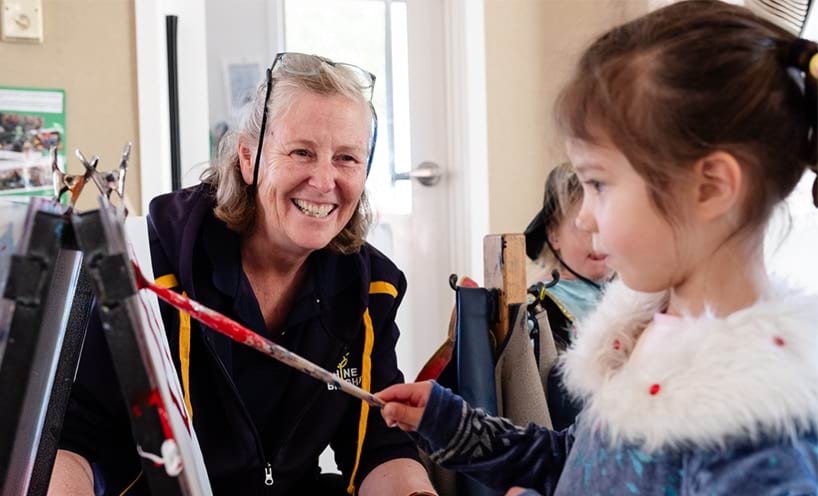
With more than 40 years in the early childhood sector, Sandra Houlahan of Shine Bright Elmore Kindergarten’s leadership, dedication and commitment to community-connected learning has had a lasting impact on children, families and educators across the region.
“I think after 40 plus years in kindergarten, I have been lucky to work in many places and from many perspectives. I am still passionate about the work, the children, the families and the community. I am excited to be able to use the knowledge I am gaining through study,” she says.
Learning connected to place
A hallmark of Sandra’s work is her focus on connecting children to their local environment and community.
Through close collaboration with the local kindergarten, two primary schools and families, Sandra has helped establish a shared calendar of events and initiatives that strengthen relationships and support smooth transitions to school. These partnerships ensure children and families feel confident and connected as they move from kindergarten into formal schooling.
Her River Kinder initiative is an example of this. A nature‑based learning opportunity where children regularly explore the Campaspe River environment, these experiences help children develop curiosity, resilience and a deeper understanding of their local environment and community.
Sandra’s professional practice is guided by a strong service philosophy centered on fun, play, friendship and learning. Her programs are intentionally designed around children’s interests, supporting independence, creativity and collaborative learning.
She works closely with her team to reflect on practice and continuously improve the learning environment, encouraging educators to share ideas, document observations and participate in collaborative planning.
Sandra’s dedication, leadership and passion for early learning continue to make a meaningful difference for children and families in Elmore, and were a key reason she was recognised as Educator of the Year at the 2025 Victorian Early Years Awards.
Developing agency in practice
Information to support educators to develop their understanding of children’s participation, influence, and decision making to strengthen planning and quality improvement.

Educators can strengthen children's participation, influence and decision-making in everyday practice by ensuring children’s agency.
A strong understanding of how children exercise choice, influence and participation helps educators demonstrate how children contribute to planning, assessment and curriculum decision-making, and supports educators to design responsive programs and demonstrate quality practice under the National Quality Framework.
Agency is defined as being able to make choices and decisions to influence events and to have an impact on one’s world. Children’s agency is a key element of high-quality practice.
While the concept is embedded throughout the National Quality Standard and the Approved Learning Frameworks, developing a meaningful understanding of how children influence their learning and environment requires ongoing reflection and professional learning.
Under Quality Area 1 of the National Quality Standard, educational programs are required to be child-centered and responsive to children’s strengths, interests and ideas.
Supporting children's agency also aligns with Child Safe Standards 3 by creating environments where children are encouraged to express their views and participate in decisions that affect them.
Understanding agency in practice
Child directed learning refers to a child’s capacity to make choices, express ideas, influence decisions and actively participate in their learning and environment.
How children demonstrate influence and participation in decision-making varies depending on their age, development, communication style, culture and context.
Understanding agency means recognising children are capable contributors whose perspectives can shape curriculum decisions and significantly contribute to decisions across the program.
Educators can strengthen their understanding of agency by:
- engaging with the Approved Learning Frameworks
- participating in professional discussions and critical reflection
- observing how children make choices, solve problems and influence play experiences
- reflecting on how routines, environments and teaching approaches either support or limit children's participation
- seeking children's feedback through conversations, observations, drawings, photographs and other forms of communication to assess learning and development.
From understanding to embedding
Once educators have developed a deeper understanding of children’s capacity to influence their learning and environment, they can intentionally embed it within educational programs. This may include:
- observing children's interests and incorporating them into experiences and projects
- providing genuine opportunities for choice and decision-making
- involving children in discussions about environments and learning experiences
- using children's feedback to adapt programs and teaching strategies
- revisiting decisions with children to demonstrate their views are valued and acted upon.
An educator’s understanding of children’s participation and influence can also inform Quality Improvement Plan development.
When reflecting against Quality Area 1, educators may consider how effectively children’s voices influence planning, decision-making and continuous improvement activities.
By linking children’s participation and influence to Quality Improvement Plan goals and actions (DOCX), educators can demonstrate a deliberate and systematic approach to embedding children's voices within educational programs and practice.
Supporting children’s participation also contributes to child safety.
The Child Safe Standards emphasise the importance of empowering children to express their views and participate in decisions that affect them. Creating environments where children are listened to and respected strengthens both wellbeing and protective practices.
Resources
- National Quality Standard (Quality Area 1) – ACECQA
- Supporting Agency: Involving Children in Decision-Making – ACECQA
- Guide to the National Quality Framework – ACECQA
- Belonging, Being and Becoming – Early Years Learning Framework
- My Time Our Place (MTOP) – Framework For School Aged Care
- Victorian Early Years Learning and Development Framework
- Victorian Child Safe Standards
- Children's Agency and Participation – ACECQA
Reminder to complete National Child Safety training
The deadline for workers and volunteers to complete mandatory child safety training is approaching.
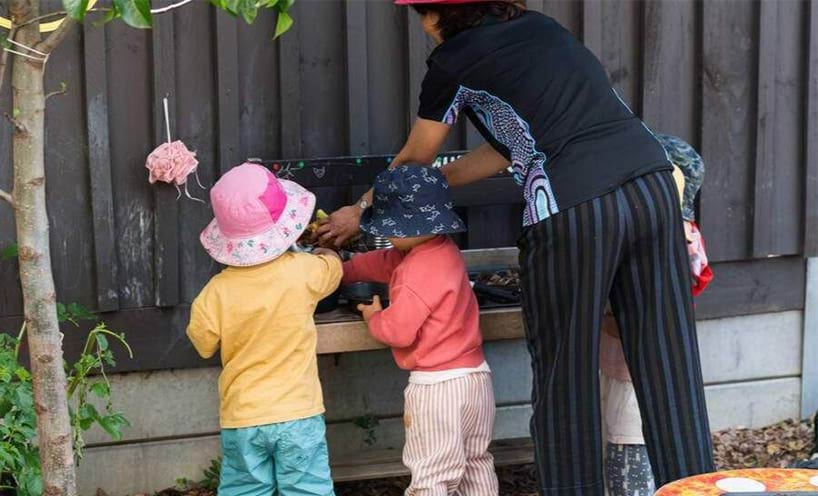
Early Childhood Education and Care staff in Australia must complete child safety training and child protection training.
The free training assists staff to understand the child safety framework and requirements for keeping children safe.
Both child safety training and child protection training are mandated for specific roles under the National Law and National Regulations and must be completed by 27 August 2026.
Foundation training
Approved providers must ensure Foundation child safety training is completed before the deadline.
Foundation training consists of 2 modules:
- understanding child safety
- understanding and identifying child abuse and neglect.
The deadline for completing the 2 foundation training modules is 27 August 2026 for all existing workers appointed before 14 August 2026.
Workers appointed after 14 August 2026 must complete the training:
- within 14 days of the person being employed, engaged or appointed at the service, or
- before working directly with children (whichever is earlier).
Individuals can download a completion certificate from Geccko after completing both Foundation modules. Read instructions on using Geccko, including how to download the certificate.
Information you need at your fingertips: VECRA’s new website
VECRA's new website makes it easier for Early Childhood Education and Care services, parents and carers to access information they need.
Among recommendations from the Rapid Child Safety Review was a call for strengthening transparency and parents’ right to know about the safety and quality of care in early childhood education and care (ECEC) services.
VECRA has launched a new website as part of its commitment to meeting those recommendations.
The new website makes it easier for ECEC services and educators to find clear and accurate information on how to meet their obligations to deliver safe, high-quality education and care under national and Victorian laws and regulations.
Information has been streamlined and can be found via the ‘requirements for providers and services’ tile on the front page of the website.
Each topic is clearly signposted and linked to the Australian Children's Education & Care Quality Authority or Victoria-specific guidance where relevant.
The website also caters to parents and carers with a new dedicated page to help them understand what good child safety practices and quality services look like, and how to raise a concern or make a complaint. Services are encouraged to share this information with their families and community.
VECRA’s website is a living and breathing resource that will continue to be updated in the weeks and months ahead as services need to know about and comply with new regulations.